

Test traceability is the practice of linking test cases to specific requirements, providing clear visibility into which features have been validated and ensuring nothing is missed.
This guide will walk you through the importance of test traceability, the different types of traceability, and how to effectively implement it in your testing process.
What is Traceability in Software Testing?
Traceability in software testing refers to the process of linking test cases directly to specific requirements, features, or user stories. This connection ensures that each requirement is adequately tested and that no essential functionality is missed.
Simply put, traceability provides a clear map of which test cases correspond to which parts of the software, making it easy to track the coverage of each requirement. It allows testers, developers, and project managers to verify that the system behaves as expected, meeting all predefined goals.
Why Test Traceability Matters
Test traceability is crucial for several reasons, making it an essential practice in software testing. Here’s a detailed look at why it matters:
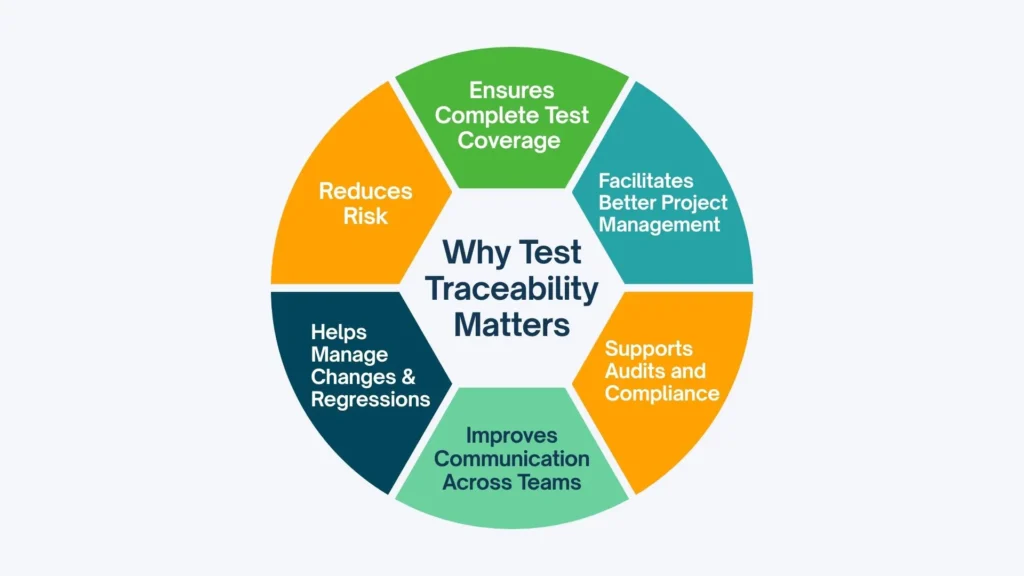
Ensures Complete Test Coverage
Traceability makes it easy to track which requirements have been tested and which haven’t. Tools like AgileTest help maintain this connection by allowing testers to link every requirement directly to its test case.
This is crucial for ensuring that all requirements, whether functional or non-functional, are covered by test cases. Without traceability, it’s easy for critical features to be missed, potentially leading to bugs and project delays.
Facilitates Better Project Management
When teams have visibility into which tests cover which requirements, it becomes easier to manage testing efforts. This visibility helps in planning test execution, allocating resources, and prioritizing tasks based on critical features or user stories. Without traceability, it can be difficult to track progress or identify gaps in the testing process.
Reduces Risk
In software projects, untested requirements can lead to project delays, cost overruns, or, worse, product failure. Traceability ensures that every aspect of the software has been validated, reducing the chance of risks that might arise from incomplete testing.
Supports Audits and Compliance
For industries with stringent compliance requirements (such as healthcare, finance, or government), demonstrating that testing was performed to meet all specified requirements is often mandatory. A traceability matrix provides a clear and documented trail that auditors or regulators can review, simplifying compliance efforts.
Improves Communication Across Teams
Traceability also enhances communication between different teams. Testers can quickly explain which requirements have been tested and how each test maps back to a business or functional need. This transparency makes it easier to coordinate between developers, testers, product managers, and other stakeholders.
Helps Manage Changes and Regressions
As software evolves, traceability helps ensure that new changes or updates are properly tested against existing requirements. If a bug is found, traceability allows teams to quickly locate which tests are related to the affected requirements and ensure no regression occurs.
About Software Testing Traceability Matrix
A Traceability Matrix is a tool that documents the relationships between test cases and their associated requirements. Think of it as a table that lets you cross-check each requirement with the corresponding test case, ensuring that nothing is left out.
For example, if you have a feature requirement to “Allow users to reset their passwords,” the traceability matrix will list which tests validate that functionality, such as “Test if the reset link is sent correctly” or “Test if the password is updated properly.”
The matrix provides a visual map that makes it easier to track your testing progress and identify any missing or incomplete areas.
3 Basic Types of Test Traceability
There are three primary types of traceability used in software testing: forward, backward, and bi-directional. Each type plays a unique role in ensuring comprehensive testing and aligning test cases with requirements.
Forward Traceability
Forward traceability tracks the relationship between requirements and the tests that verify them. It ensures that each requirement is covered by one or more test cases.
For example, if a feature requires users to log in using a secure password system, forward traceability ensures that a test exists to verify that the login system works as intended.
This type of traceability helps you verify that all requirements have been properly translated into test cases, minimizing the risk of missing tests for critical features.
AgileTest allows testers to easily view the link between each requirement and its corresponding test case, ensuring comprehensive test coverage.
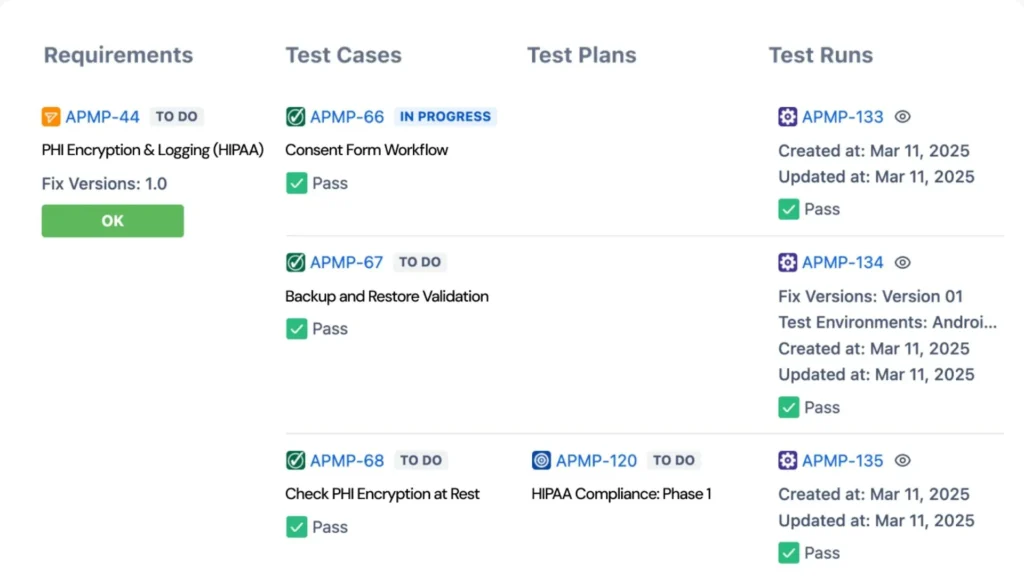
Backward Traceability
Backward traceability does the opposite—it checks that each test case is linked back to a specific requirement. In other words, it ensures that every test case has a clear purpose and is necessary to meet a specific requirement.
For instance, if you have a test case that checks the login functionality, backward traceability ensures that this test case is connected to a requirement for secure user authentication.
Backward traceability is useful for ensuring that tests are not redundant and that they contribute to fulfilling the actual business or functional needs of the project.
Bi-Directional Traceability
Bi-directional traceability combines both forward and backward traceability. It verifies that each requirement has corresponding test cases (forward) and that each test case is tied back to a requirement (backward).
This type of traceability provides the most complete and robust testing coverage, as it ensures that both the creation of tests is based on requirements and that the tests align with those requirements at all stages of the project.
With bi-directional traceability, you can easily trace from requirements to tests and back, offering a comprehensive view of your test coverage and helping to identify areas that need more attention.
Parameters to be Included in Traceability Matrix
To create an effective traceability matrix, it’s important to include several key parameters. These help maintain organization and clarity, ensuring that the matrix serves its purpose effectively. Here are the most important parameters to include:
- Requirement ID
- Test Case ID
- Test Case Description
- Test Status (Pass/Fail/Blocked)
- Test Execution Details (Date, Tester’s Name, Test Environment)
- Test Type (Functional, Non-functional, Regression, etc.)
- Version Control (for changes in requirements or tests)
Including these parameters ensures that the matrix is comprehensive and useful for tracking both the testing process and its outcomes.
Understanding the Limits of Test Traceability
While test traceability is helpful, it’s not a silver bullet. There are some limits to be aware of:
- Complexity in Large Projects: In large projects with many requirements and test cases, maintaining traceability can be difficult and time-consuming. It’s important to regularly update the matrix to reflect changes.
- Overhead of Maintaining a Matrix: The process of continuously updating and managing traceability can require effort and attention, especially as requirements change or evolve.
- Focus on Coverage, Not Just Linking: While it’s important to link test cases to requirements, the quality of those tests is just as important. Traceability alone won’t ensure that your tests are effective.
Tips for Effective Software Testing Traceability
To make the most out of test traceability, consider these best practices:

- Automate Where Possible: Use tools to automatically generate and update your traceability matrix. This reduces the manual effort required and helps keep everything up-to-date.
- Maintain Consistency: Make sure that your requirements and test cases are consistently identified and labeled. This helps avoid confusion down the line.
- Review Regularly: As your project progresses, revisit the traceability matrix to ensure everything is still aligned and up-to-date.
- Prioritize Key Features: Focus on ensuring traceability for the most critical features, especially when time or resources are limited.
- Collaborate with Your Team: Communication is key in traceability. Make sure all relevant stakeholders are aware of the importance of test traceability and are actively participating in its upkeep.
→ Try AgileTest – Best Test Management Tool for Jira
Conclusion
Test traceability might seem like an extra layer of work, but it’s an essential practice for ensuring that your software testing is thorough and reliable. By keeping track of which tests validate which requirements, you can make sure your software meets its goals, reduce risks, and make your testing process more transparent.
While the process can be challenging, using tools, staying organized, and regularly reviewing your matrix can make it manageable and highly beneficial for your team. Whether you’re a beginner or a seasoned practitioner, test traceability is a smart way to ensure your testing efforts are both effective and efficient.