
In the intricate dance of software development, the testing team often plays the role of the unsung hero. They are the guardians of quality, the champions of the end-user, and the critical safety net that ensures a product is not just functional but truly great. But what makes a testing team effective? It’s not just about finding bugs; it’s about having the right people with the right blend of skills.
Staffing a test team is far more than just filling seats. It’s a strategic activity, a core part of test planning that requires a deep analysis of the project’s context. The perfect tester for a fast-paced mobile gaming app might have a different skill set than one testing a high-security banking platform.
This guide will take you on a deep dive into the three core pillars of skills that form the foundation of a world-class testing team: Professional and Methodological Competence, Social Competence, and Personal Competence. Whether you’re a manager looking to build your dream team or a professional aspiring to become an indispensable tester, understanding this blend of abilities is your key to success. 🚀
Pillar 1: Professional and Methodological Competence (The “What You Know”)
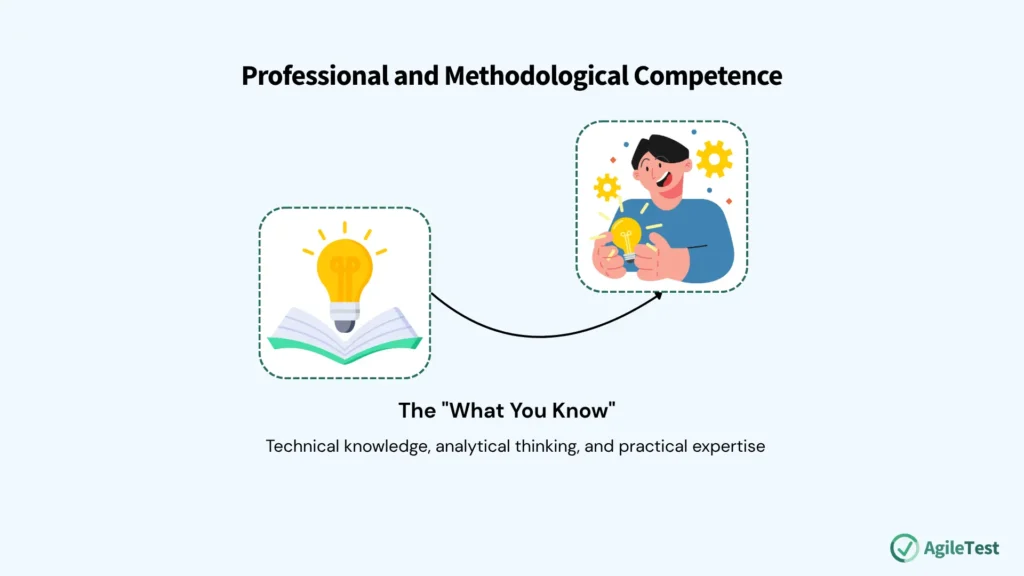
This first pillar is the bedrock of a tester’s abilities. It encompasses the technical knowledge, analytical thinking, and practical expertise required to plan, design, and execute tests effectively. It’s the “hard skills” part of the equation, but as we’ll see, it’s incredibly nuanced and context-dependent.
The Core Testing Process: Skills for Every Stage
A tester wears many hats throughout the software development lifecycle (SDLC). Each stage of the testing process demands a unique combination of professional skills.
- Test Planning: This is the strategic phase, akin to an architect designing a blueprint. It requires strong conceptual knowledge and the ability to develop a comprehensive test strategy. A planner must think about the big picture: What are we testing? Why are we testing it? What are the biggest risks? They need to define the scope, objectives, and resources, creating a roadmap that the entire team will follow.
- Test Monitoring and Control: Once the plan is in motion, you need a general on the field. This stage calls for robust project management skills. It’s about tracking progress against the plan, managing timelines, coordinating tasks, and reporting status to stakeholders. Skills in using tools like Jira, Zephyr, or TestRail become crucial here, as does the ability to adapt the plan when faced with unexpected roadblocks.
- Test Analysis: Here, the tester becomes a detective. This phase requires sharp analytical skills to dissect the “test basis”—the requirements documents, user stories, and design specifications. The goal is to identify what needs to be tested and to uncover ambiguities or omissions before a single line of code is even written. A great analyst also excels at product risk analysis, identifying which features are most critical or most likely to fail, which helps prioritize the testing effort.
- Test Design: With a clear understanding of what to test, the designer now figures out how to test it. This demands deep skills in test techniques. Knowledge of methods like equivalence partitioning, boundary value analysis, and state transition testing allows a designer to create a small number of powerful test cases that provide maximum coverage. It also requires conceptual knowledge for designing and specifying the necessary test environments and data.
- Test Implementation: This is where the plan becomes tangible. It requires a blend of judgment skills and technical expertise. The implementer must make smart decisions about which designed tests to prioritize and automate. For test automation, this means proficiency in test script programming using languages like Python, Java, or JavaScript and frameworks like Selenium, Cypress, or Playwright. It also involves the technical know-how to set up and configure complex test environments, perhaps using technologies like Docker or Kubernetes.
- Test Execution: It’s showtime! This phase demands technical expertise to run automated test suites and interpret their results. But it’s not just about pressing “play.” It’s also about the art of exploratory testing—a creative, unscripted approach where the tester uses their intuition and experience to “explore” the application and uncover unexpected defects. Crucially, execution involves the skill of evaluating test results and logging defects with clarity and precision.
- Test Completion: The final act involves summarizing and communicating the story of the testing effort. This requires the ability to communicate project outcomes clearly and effectively to both technical and non-technical stakeholders. It also demands a high degree of personal responsibility, as the team makes critical decisions about product readiness based on the information provided.
Explore our article about the Fundamental Testing Process: The Fundamental Test Process: A Comprehensive Guide
Adapting Skills to the Testing Landscape
Not all testing is created equal. The specific professional skills required can change dramatically based on the type of testing and the level at which it’s performed.
- Test Levels: A tester working on unit tests needs to be able to read and understand code, often working directly with developers. In contrast, a tester focused on User Acceptance Testing (UAT) needs deep business expertise and the ability to think like an end-user to validate that the system meets real-world needs.
- Test Types:Functional testing requires a profound understanding of the application’s business domain to assess its suitability. On the other hand, non-functional testing requires a completely different toolset. For example:
- Performance Testing: Requires expertise in tools like JMeter or LoadRunner and the ability to analyze metrics like response time and throughput.
- Security Testing: Demands knowledge of common vulnerabilities (like the OWASP Top 10), penetration testing techniques, and security tools.
- Maintainability Testing: Requires technical expertise to assess the quality and structure of the code itself, often through static code analysis.
Have a look at our guide about Test types: Test Management in Different Test Types
The Powerful Influence of the Project Environment
The project’s context is the final, critical factor in determining the necessary professional skills.
- The System Domain: A tester for an automotive infotainment system needs to understand vehicle networks (like CAN bus) and safety standards. A tester in the gambling industry needs deep knowledge of regulatory compliance and random number generation. A tester in the e-commerce space needs to be an expert in payment gateways, inventory management, and user experience. Business expertise is not a nice-to-have; it’s a necessity.
- Software Architecture and Technology: A project built on a microservices architecture requires testers with strong API testing skills and an understanding of technologies like REST, GraphQL, and message queues. A monolithic legacy application might require a different approach. The programming languages, interface technologies, and database systems all dictate the specific technical expertise needed on the team.
- The Software Development Life Cycle (SDLC): The chosen development model profoundly impacts the skills required. A tester in a traditional, document-centric Waterfall project needs to be adept at formal reviews and structured test case design. Conversely, a tester in a fast-paced Agile team must be a master of collaboration, continuous integration, and exploratory testing, providing rapid feedback within short sprints.
Read our comparison blog about Waterfall and Agile here: Agile Testing vs Waterfall Testing
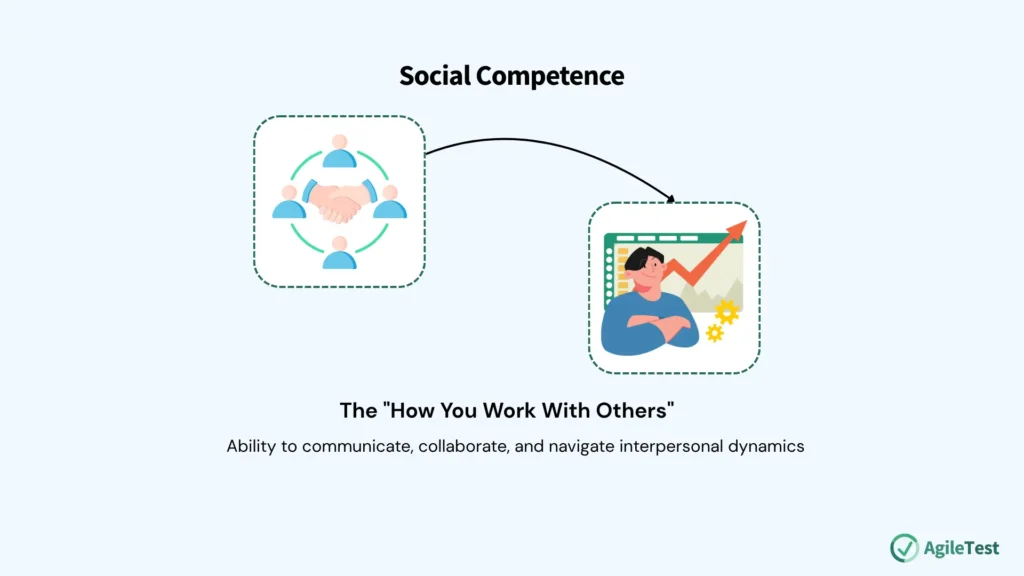
Pillar 2: Social Competence (The “How You Work With Others”)
If professional competence is the engine, social competence is the oil that keeps it running smoothly. Software development is a team sport, and a tester’s ability to communicate, collaborate, and navigate interpersonal dynamics is just as critical as their technical prowess. Social competence enables team members to build strong relationships and work together effectively to achieve the project’s quality goals. 🤝
The Art of Communication
Testers are communicators above all else. They must bridge the gap between business requirements, technical implementation, and user experience. This skill manifests in several key areas:
- Reporting Defects: This is the most famous, and often most fraught, form of tester communication. A great tester knows that a bug report is not an accusation; it’s a collaborative tool. The goal is to help developers fix the problem, not to point fingers. This requires writing reports that are clear, concise, objective, and easily reproducible. It’s the difference between “The checkout is broken” and “When a logged-in user with a 10% discount coupon adds three specific items to their cart and proceeds to checkout via PayPal, the final price is calculated incorrectly. Expected: $90. Actual: $100. See attached logs and screenshot.”
- Giving and Receiving Feedback: Testers must be able to provide constructive feedback on designs and requirements and be able to receive feedback on their own work gracefully. This builds a culture of continuous improvement.
- Explaining Risk: A key role for a tester is to communicate risk to project managers and stakeholders. This requires the ability to translate technical findings into business impact, helping leadership make informed decisions about whether to ship a product or delay for more fixes.
Make use of AgileTest report features to keep track and manage your testing activities effectively.
The Power of Collaboration and Teamwork
Modern software development, especially in Agile environments, has erased the old silos. Testers are no longer isolated at the end of the process; they are integral, collaborative members of the team from day one. This requires a strong ability to work in a team, contributing to group discussions, participating in planning sessions, and working hand-in-hand with developers, business analysts, and product owners toward a shared goal: a high-quality product. Practices like pair testing (where two team members test together at one machine) are powerful examples of this collaborative spirit in action.
Install AgileTest to enhance all QA processes
Navigating Conflict with Grace
Disagreements are inevitable. A developer might not be able to reproduce a bug. A project manager might push to release a feature that the test team feels is too risky. This is where conflict resolution skills become invaluable. A socially competent tester handles these situations with diplomacy and professionalism. They rely on data and evidence rather than emotion, seek to understand other perspectives, and work toward a compromise that serves the best interests of the product and the end-user. They know how to deal constructively with sub-optimal test conditions (like an unstable test environment) without derailing the team’s morale.
The level of social skill required can vary. A tester working offsite in a document-heavy sequential model may rely more on formal, written communication. But in an Agile co-located team, the demands for constant, high-bandwidth verbal communication and collaboration are significantly higher.
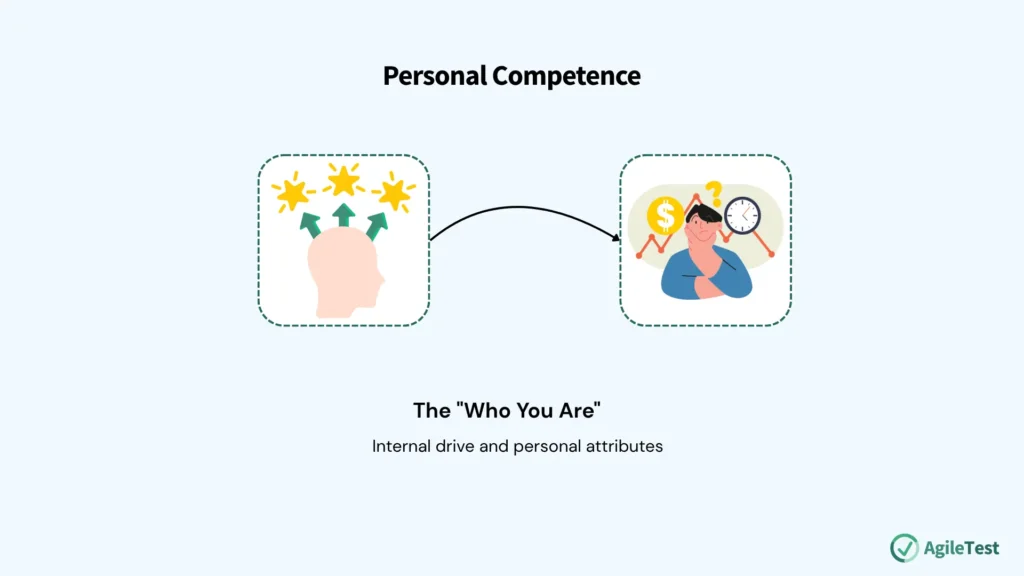
Pillar 3: Personal Competence (The “Who You Are”)
This final pillar is about character and mindset. It’s the internal drive and personal attributes that enable a tester to apply their professional and social skills effectively and consistently. These are the traits that separate a good tester from a truly great one. 🧠
Self-Management and Discipline
Especially in modern work environments like self-organized Agile teams or remote work setups, the ability to manage oneself is paramount. This includes time management, prioritization, and the discipline to stay focused on the most important tasks without constant supervision. For a test manager in a more hierarchical team, this competence shifts towards the ability to effectively delegate work, empowering their team members while maintaining oversight.
Reliability and Resilience
Testing can be a high-pressure job, especially as release deadlines approach. The test team is often the final gatekeeper, and the weight of that responsibility can be immense. This is where reliability and resilience are crucial. A reliable tester is someone the team can count on to deliver on their commitments. A resilient tester can handle the stress of time-critical projects, bounce back from setbacks, and maintain a positive and pragmatic attitude even when things get tough.
A Mindset of Growth, Curiosity, and Helpfulness
Technology is in a state of perpetual motion. The tools, frameworks, and methodologies used today will be different tomorrow. Therefore, the most valuable personal traits a tester can possess are a deep-seated willingness to learn and an openness to change. They must be lifelong learners, constantly updating their skills to stay relevant.
Beyond that, the secret weapon of every elite tester is curiosity. It’s the innate desire to ask “What if…?” What if I enter a negative number? What if I lose my network connection at this exact moment? What if I do these steps out of order? This inquisitive nature is what uncovers the subtle, complex, and critical bugs that scripted tests often miss.
Finally, a willingness to help fosters a positive team environment where knowledge is shared freely and everyone works to lift each other up.
Weaving It All Together: The Profile of a Modern Tester
The modern software tester is not a one-dimensional bug hunter. They are a “T-shaped” professional.
- The vertical bar of the ‘T’ represents their deep professional competence in the art and science of testing—their expertise in test design, automation, and risk analysis.
- The horizontal bar of the ‘T’ represents their broad abilities in other areas: their social competence for seamless collaboration, their understanding of the business domain, their technical knowledge of the system’s architecture, and their personal drive for continuous improvement.
Conclusion
Building an effective test team is a thoughtful process of balancing skills across these three essential pillars. It’s about finding individuals who not only have the right technical and methodological chops but also possess the social grace to integrate seamlessly with the development team and the personal character to thrive under pressure and embrace change.
By focusing on this holistic view of tester skills—blending what they know, how they work with others, and who they are—organizations can build a quality assurance function that is not just a safety net, but a strategic partner in creating truly exceptional software.
Frequently Asked Questions (FAQ)
Q1: What are the most important technical skills for a tester today?
A: While it depends on the project, a strong foundation in test automation (e.g., Selenium, Cypress), API testing (e.g., Postman, REST-Assured), and an understanding of CI/CD pipelines (e.g., Jenkins, GitLab CI) are incredibly valuable. Basic scripting or programming skills (Python is a popular choice) are also becoming essential.
Q2: Can I be a good tester without strong social skills?
A: You can be a technically proficient tester, but to be a great tester in a modern team environment, strong social skills are non-negotiable. So much of a tester’s effectiveness comes from their ability to communicate findings clearly, collaborate with developers, and advocate for quality. All of which require excellent social competence.
Q3: How do the required skills differ for an automation tester vs. a manual tester?
A: An automation tester requires deep technical expertise in programming, automation frameworks, and software architecture. A manual/exploratory tester relies more heavily on analytical skills, domain knowledge, curiosity, and an intuitive understanding of the user experience. However, the best teams have testers who can do both!
Q4: What is the single most important personal trait every great tester has?
A: If we had to pick just one, it would be curiosity. A relentless curiosity to understand how things work and a mischievous desire to figure out how to break them is the driving force behind discovering the most critical and unexpected bugs.